╔
The Port of Helsinki is at the centre of a long-term, inclusive and forward-looking reorganization process of its terminals. A truly city-endorsed design that reimagines Helsinki’s harbour infrastructure to meet the evolving demands of modern maritime traffic and urban life.
In terms of passenger numbers, the Port of Helsinki is Finland’s largest passenger port and one of Europe’s busiest international passenger traffic ports. The total economic impact of port activities in Helsinki is more than EUR 4 billion a year and they employ around 25,000 people indirectly. Sea routes are vital to foreign trade, and the Port of Helsinki’s proportion of the total value of Finland’s foreign trade sea transports is nearly 50%.
The Port of Helsinki also plays an enormous role in the security of supply of Finland as a whole. Roughly 10 million tourists pass through harbours in Helsinki every year, and most of them are travelling to Tallinn. The smooth connection between Helsinki and Tallinn is important for Finnish trade and industry, as passenger traffic from one city centre to another is a special attraction factor for Helsinki and Tallinn twin cities in competition between the metropolitan areas of the Baltic Sea. Tallinn is also the most important partner port for cargo traffic departing from Helsinki.
Considering this, the rearrangement program of the Port of Helsinki, which is part of the Development Program 2030, aims to reorganize harbour operations by centralizing Tallinn-bound traffic at West Harbor in Jätkäsaari and Stockholm-bound traffic at Katajanokka.
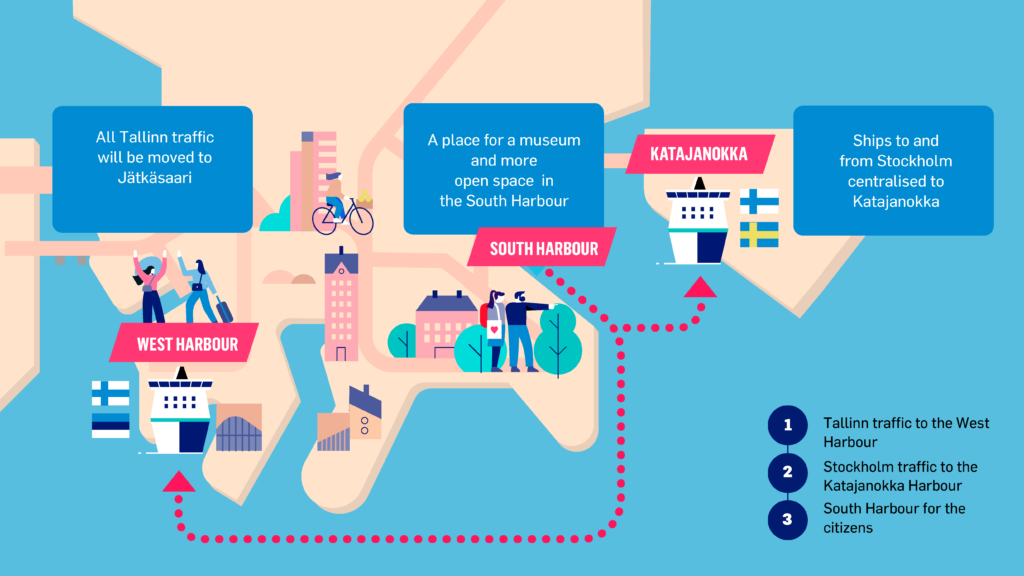
Reorganization scheme of the Port of Helsinki. (© Port of Helsinki).
At the core of the program is the strategic reorganization of RoPax (roll-on/roll-off passenger) traffic: all traffic to and from Tallinn will be concentrated in the West Harbour, while RoPax traffic to and from Stockholm will be centralized in Katajanokka Harbour. This long-term project (2023–2030s) includes constructing a new terminal in Jätkäsaari and modernizing the existing terminal in Katajanokka. The Tallinn route is by far the busiest route of the Port of Helsinki, and focusing the traffic in one place will lead to an increase in traffic volumes.
What is interesting about this process is that the planned transformation is not only infrastructural but also cultural, with a strong emphasis on inclusiveness and gender equality.
A study based on over 10,000 annual interviews identified five traveller segments, enabling tailored service development. Katajanokka primarily serves cruise travellers, while West Terminal accommodates all segments. Seasonal variations influence traveller types, and the insights from this research are being used to create more inclusive and user-friendly terminals. The project’s leadership team, composed mainly of women, has been instrumental in embedding inclusivity into every phase of development, setting a benchmark for gender equality in the port industry.
The conceptual vision for both terminals – which is still in progress – was developed involving residents, event and restaurant professionals, shipping companies, and city planners in co-creation workshops. This inclusive approach ensured that the needs of diverse stakeholders were collected and considered from the outset. The involvement of residents in the conceptual visualization was a very strong tool to promote social integration of the port in the surrounding community. Both terminals are designed to have a positive environmental, social, and economic impact, aligning with the Helsinki City strategy and promoting an inclusive workplace culture that attracts and retains a diverse workforce. In terms of engagement and costs, the Port of Helsinki has used approx. 2500 hours and around 300.000 € on the development of the conceptual visions for the two harbours.
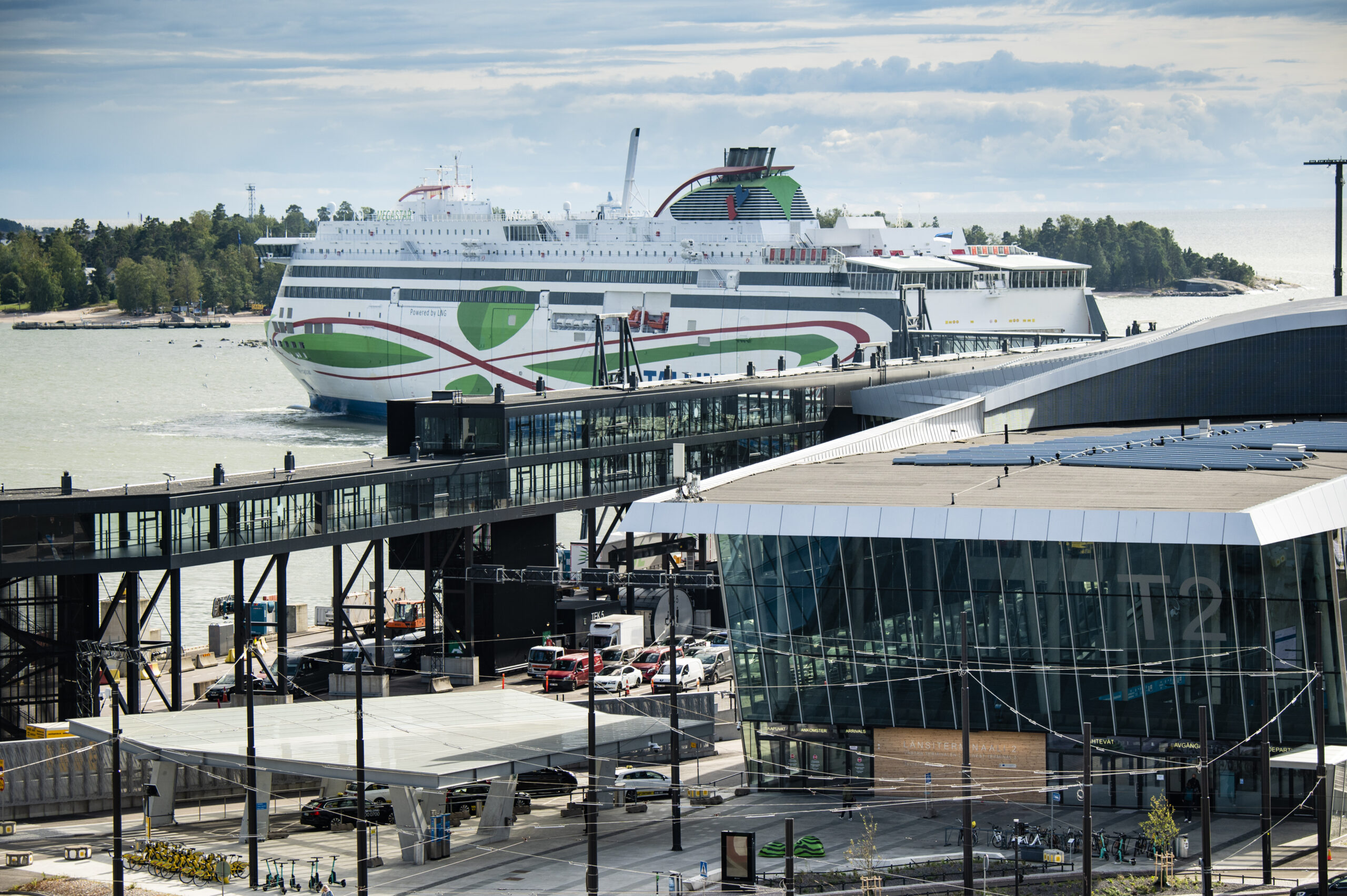
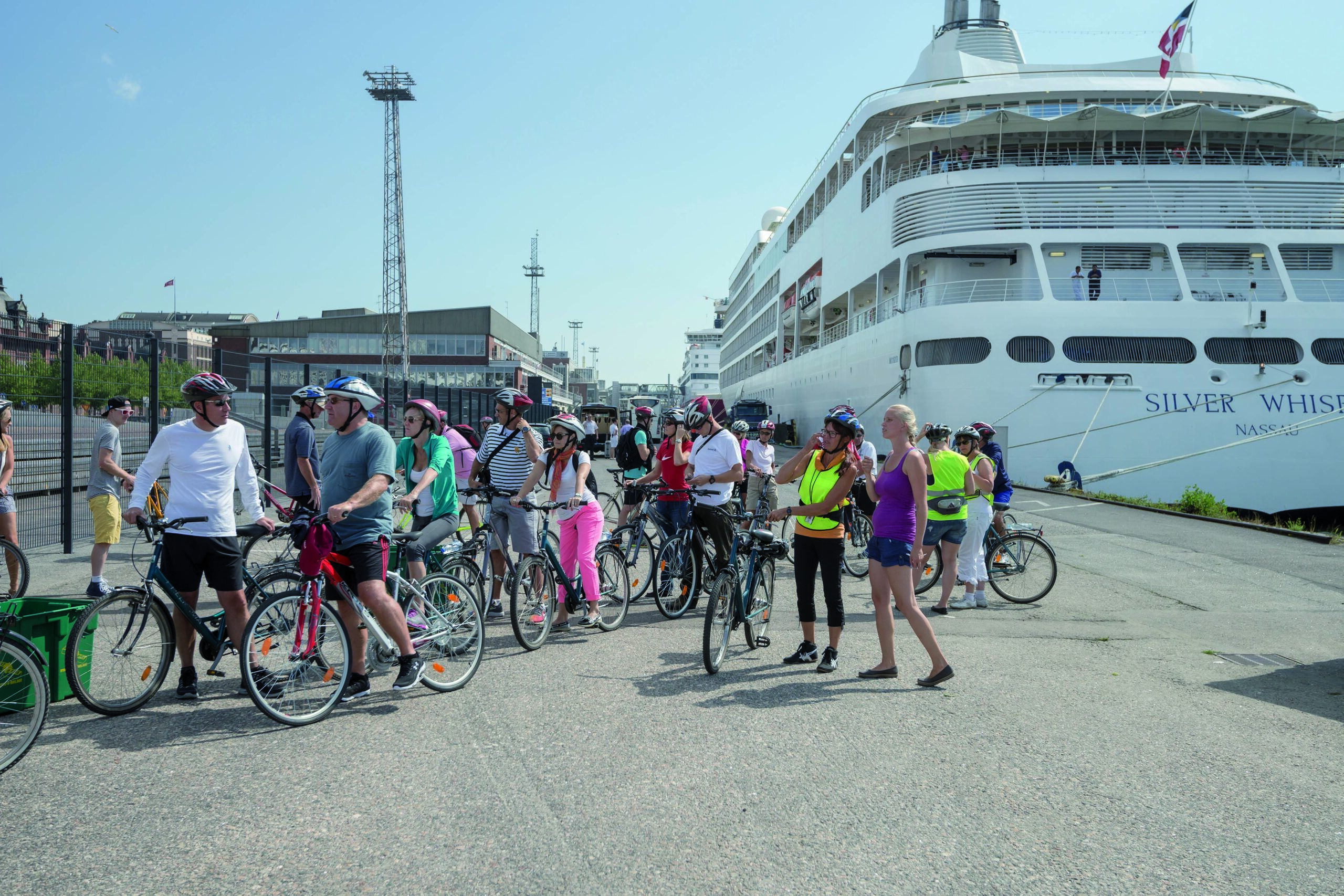
A cruise ship at the Port of Helsinki. (© Port of Helsinki).
The New West Harbor terminal in Jätkäsaari is envisioned as a landmark and a ‘living room’ for city residents while the Katajanokka terminal will serve as ‘Helsinki’s maritime heart’ — a vibrant, open, and welcoming space. Katajanokka Harbour is Helsinki’s second oldest city harbour and was founded in 1878, when South Harbour was expanded into Katajanokka. Passenger terminal operations started in the old harbour warehouse in 1976.
New Terminal in Jätkäsaari
According to the concept design shared with the civil society and stakeholders and the feasibility study, the new zoning plan for the terminal area includes a total permitted building volume of 37,000 floor square meters and 600 car park spaces. In addition to terminal facilities, the new building is designed to house commercial, office and parking facilities, as well as other services.
The work is divided into phases. The practical work started with the demolition of the old West Terminal 1 and continues with the extension of the southern tip of the West Harbour. The current changes are being carried out in preparation for the future quay and field area renovations, which will take place during the normal operation of the harbour. The comprehensive renovation of the West Harbour aims to strengthen the operational preconditions of this nationally important harbour, ensure the profitable growth of port operations and provide high-quality services for the busy passenger ferry traffic to Tallinn. The renovations in the West Harbour are expected to be completed in 2032. At that point, lorries will enter the harbour from Länsiväylä via the harbour tunnel and all passenger ferry traffic to Tallinn will be moved to the West Harbour.
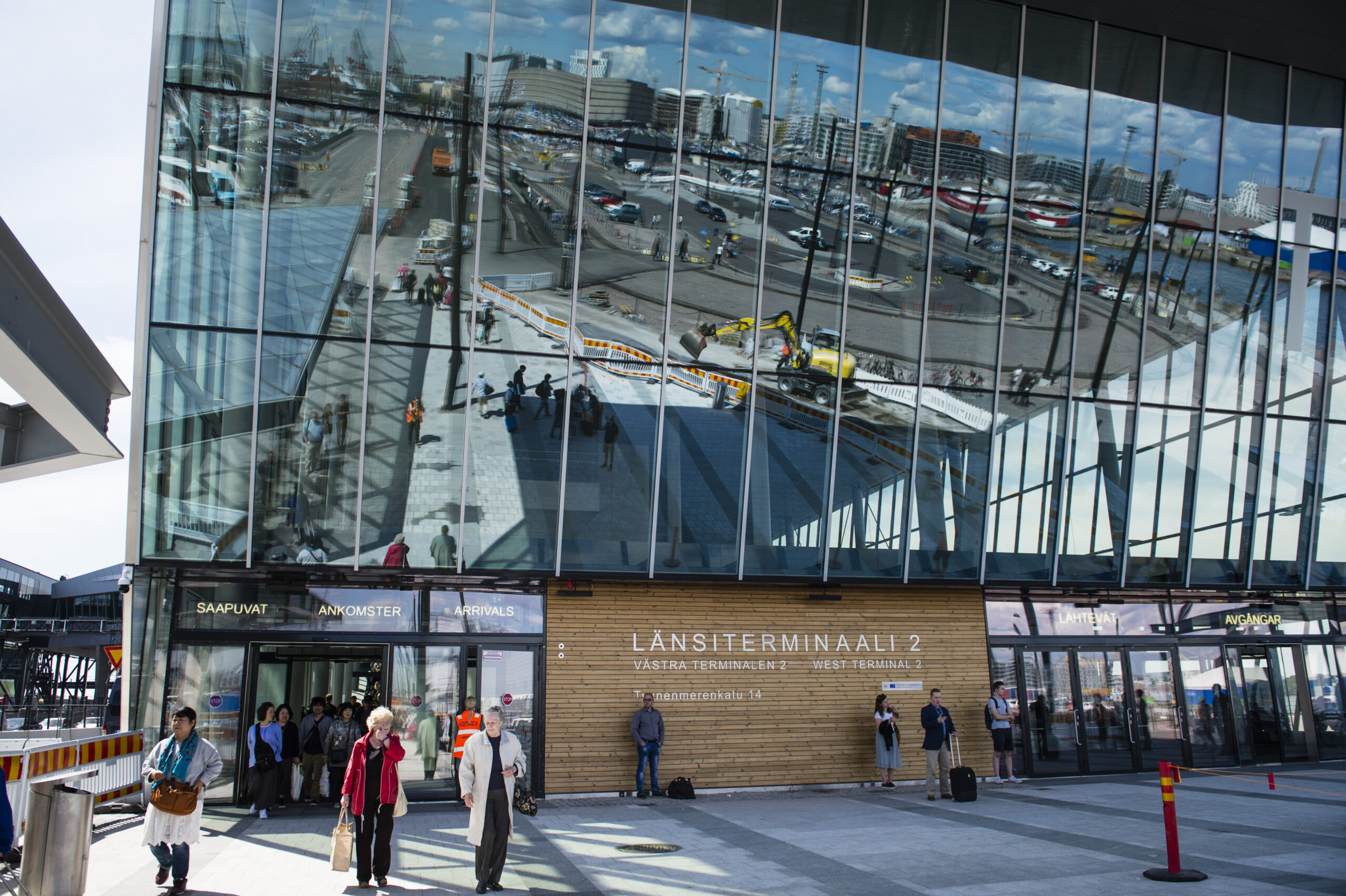
West Terminal at the Port of Helsinki. (© Port of Helsinki).
West Harbour will become a hub for sea traffic from Helsinki to Tallinn: it is the Port of Helsinki’s most important harbour in terms of economic impact, and in the 2030s, most of the passenger transport will depart from there.
The development programme consists of three parts in West Harbour:
Harbour tunnel: The harbour tunnel constructed between West Harbour and Länsiväylä will significantly improve the accessibility of West Harbour and move both cargo transport and a significant proportion of car traffic in the harbour in the Jätkäsaari and Ruoholahti areas underground.
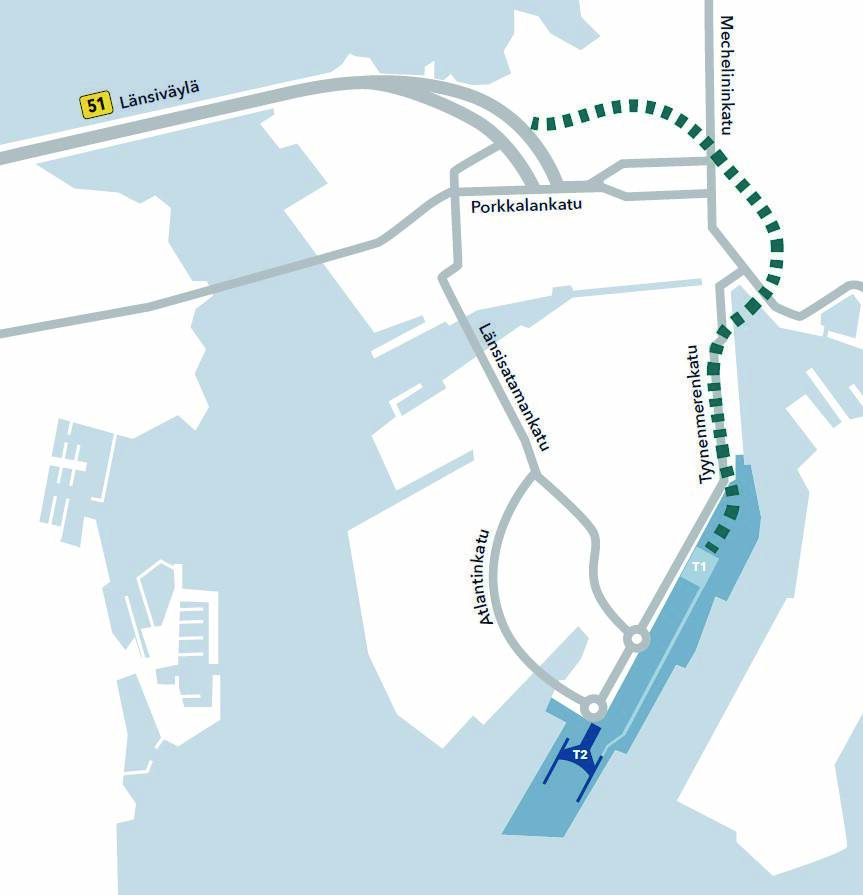
Project for the Harbour Tunnel. (© Port of Helsinki).
Jätkäsaari Maritime Centre: The new Maritime Centre will be built in the place of the current T1 terminal. In addition to terminal facilities, the new terminal will be designed to house commercial, office and parking spaces and services. The Maritime Centre is closely linked to the construction of the harbour tunnel, as the southern opening of the tunnel is planned to be located under the new Maritime Centre. Therefore, their construction schedule will be coordinated.
Quay and field area changes: The quay and field arrangements in West Harbour will also be renewed. The changes will create long-awaited additional space in the harbour area, which will allow for the harbour area’s internal traffic to be reorganised to better correlate with ship schedules. Operational activities of the harbour will continue undisrupted throughout the construction project.
The changes to be implemented in West Harbour will ensure that the Port of Helsinki and its customer have room to grow in the coming decades.
Modernizing the Existing Terminal in Katajanokka
Passenger and car ferry traffic to Stockholm will be concentrated in Katajanokka Harbour in the early 2030s. At the same time, Katajanokka’s current passenger terminal will be reformed to serve passengers and two shipping companies. The Katajanokka quays will also be made available to smaller international cruise ships.
The reforms will significantly reduce vehicle traffic in Katajanokka Harbour, as vehicle traffic serving Stockholm traffic is approximately 75% less than that of the routes to Tallinn and will therefore also reduce port-related car use in Helsinki city centre.
Katajanokka terminal. (© Port of Helsinki).
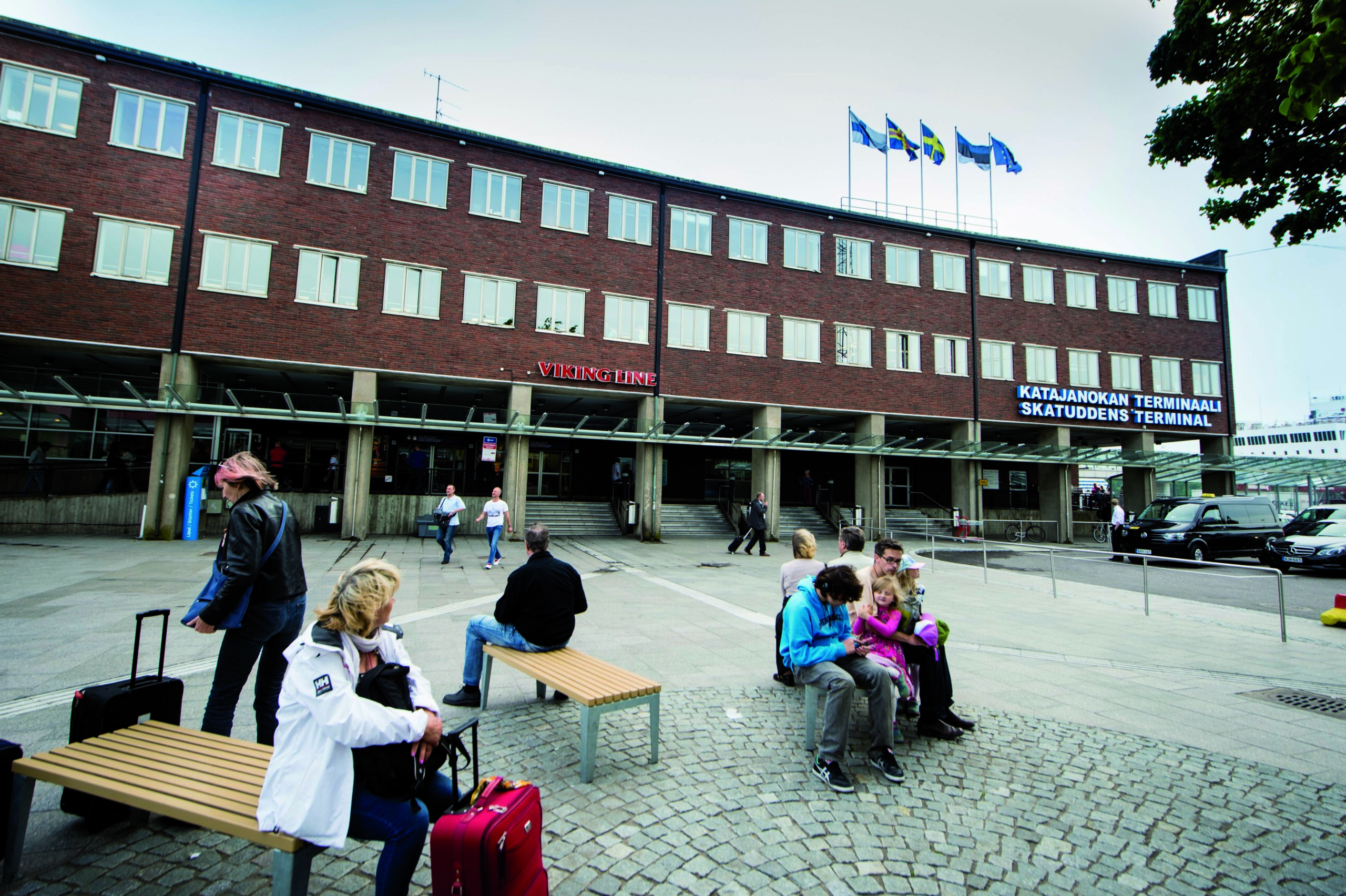
The Port of Helsinki started the Katajanokka terminal development project in June 2024 defining the vision within the co-creation workshop, then followed, in early 2025, by an architectural design competition. By the end of the year planning will start with the aim of feeding business requirements to the zoning plan process in 2026 with the contribution of a new broad stakeholder co-creation workshop. To ensure the success of the terminal development, good functionality, attractiveness of the area with commercial services and community spaces, responsible impact and unique seaside atmosphere have been identified as key objectives, pursued with a gender-sensitive lens.
When passenger and car ferry traffic to Stockholm will be transferred from South Harbour to Katajanokka, almost all the passenger ferry traffic will be removed from the Port of Helsinki area. The common goal of the City of Helsinki and the Port of Helsinki is to open the South Harbour area for more diverse use for residents. The plan is to make Makasiiniranta in South Harbour part of the pedestrian city centre and the seaside trail along the shores of Helsinki and the location of the new architecture and design museum. Only international cruise traffic and potential for high-speed vessel traffic will remain in the port area.
The Port of Helsinki’s ability to find solutions that meet the customers’ needs and expectations is a strongly correlating factor in relation to the Net Promoter Score (NPS) and the overall rating (NPS was at an excellent level of 67 in 2024). By investing in this factor, the NPS and other metrics measuring overall satisfaction are likely to continue improving.
The port’s strategy is both feasible and sustainable because it is embedded into the fabric of how the port operates: leadership accountability, structured programs, regular evaluation, and external partnerships. Together with the internal programs to empower and promote inclusivity, this holistic approach ensures that the Port of Helsinki is not just a workplace but a shared space where diversity, gender balance, and community connection are at the core of its identity.
HEAD IMAGE | Aerial view of the Port of Helsinki. (© Port of Helsinki).