╔
Puerto Caldera: convergencia histórica entre modernización portuaria e implementación del Convenio MARPOL
La licitación de Puerto Caldera: más que infraestructura
The Puerto Caldera Tender: More than Infrastructure
Puerto Caldera es el principal puerto del Pacífico costarricense y maneja aproximadamente el 80% del comercio marítimo del país. La terminal opera actualmente al 95% de su capacidad —muy por encima del 80% considerado óptimo— generando congestión, demoras y sobrecostos estimados en más de 100 millones de dólares anuales.
Las dos ofertas recibidas provienen de actores de primer nivel mundial: el Consorcio Sunset, conformado por APM Terminals y Hanseatic Global Terminals (anteriormente SAAM Puertos); y la empresa filipina International Container Terminal Services (ICTSI). La concesión, estructurada bajo modalidad de asociación público-privada con asesoría del Banco Mundial (IFC), contempla un plazo de 30 años y la construcción de nuevos puestos de atraque con capacidad para buques Panamax.
Pero lo verdaderamente significativo de esta licitación trasciende la infraestructura física. La concesión actual vence en agosto de 2026, apenas semanas después de que Costa Rica haya asumido obligaciones vinculantes bajo el Convenio MARPOL. Esta sincronía temporal abre una ventana única: los nuevos contratos de concesión pueden —y deben— incorporar desde su origen las obligaciones ambientales que el país acaba de asumir internacionalmente.
Puerto Caldera is Costa Rica’s main Pacific port and handles approximately 80% of the country’s maritime trade. The terminal currently operates at 95% capacity—well above the 80% considered optimal—generating congestion, delays, and cost overruns estimated at over 100 million dollars annually.
The two bids received come from world-class players: the Sunset Consortium, formed by APM Terminals and Hanseatic Global Terminals (formerly SAAM Puertos); and the Philippine company International Container Terminal Services (ICTSI). The concession, structured as a public-private partnership with World Bank (IFC) advisory services, spans 30 years and includes construction of new berths with Panamax vessel capacity.
But what is truly significant about this tender transcends physical infrastructure. The current concession expires in August 2026, just weeks after Costa Rica will have assumed binding obligations under the MARPOL Convention. This temporal synchronicity opens a unique window: the new concession contracts can—and must—incorporate from their inception the environmental obligations the country has just assumed internationally.
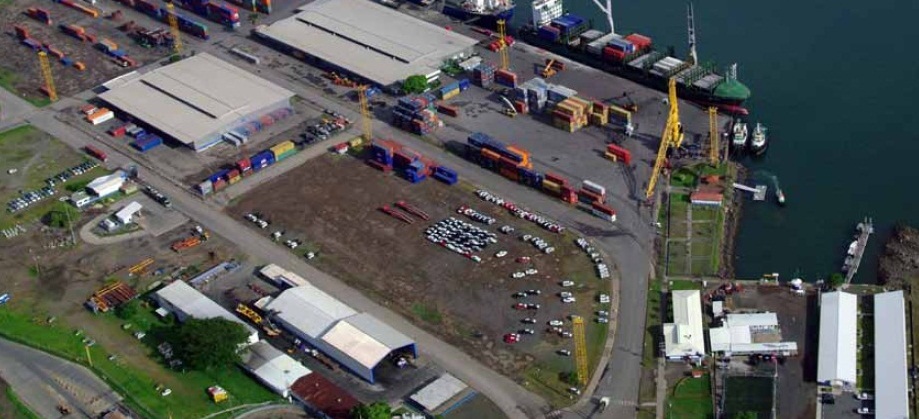
Vista del área de operaciones de Puerto Caldera: la terminal de contenedores y el muelle granelero. (Foto: Cortesía de SPC).
View of the Puerto Caldera operations area: the container terminal and the bulk cargo dock. (Photo: Courtesy of SPC).
MARPOL: 25 años de espera, una oportunidad irrepetible
MARPOL: 25 Years of Waiting, an Unrepeatable Opportunity
El 24 de junio de 2025, la Asamblea Legislativa de Costa Rica aprobó finalmente el Convenio Internacional para Prevenir la Contaminación por los Buques (MARPOL 73/78). La historia detrás de esta aprobación es reveladora: en 1999, la Sala Constitucional había declarado inconstitucional el mismo convenio, argumentando que Costa Rica “no contaba con las facilidades necesarias” para cumplirlo.
Durante 25 años, Costa Rica —un país que se presenta al mundo como paraíso natural y promotor de luchas conservacionistas— careció del estándar ambiental marítimo más importante del mundo. Mientras tanto, Ecuador, Colombia y Chile ratificaron MARPOL e implementaron sus obligaciones gradualmente, ganando competitividad portuaria internacional.
La paradoja es evidente: el perfeccionismo regulatorio costarricense de 1999 —exigir capacidades completas antes de asumir compromisos— resultó contraproducente. La experiencia internacional demuestra que los países desarrollan capacidades precisamente después de asumir compromisos internacionales exigentes, no antes.
Seis días después de aprobar MARPOL, la Asamblea Legislativa tramitó también la adhesión al Protocolo de Londres de 1996, que regula los vertimientos deliberados al mar. Esta secuencia revela una estrategia coordinada sin precedentes en la política portuaria costarricense.
Drawing On June 24, 2025, Costa Rica’s Legislative Assembly finally approved the International Convention for the Prevention of Pollution from Ships (MARPOL 73/78). The story behind this approval is revealing: in 1999, the Constitutional Court had declared the same convention unconstitutional, arguing that Costa Rica “did not have the necessary facilities” to comply with it.
For 25 years, Costa Rica—a country that presents itself to the world as a natural paradise and promoter of conservation efforts—lacked the world’s most important maritime environmental standard. Meanwhile, Ecuador, Colombia, and Chile ratified MARPOL and gradually implemented their obligations, gaining international port competitiveness.
The paradox is evident: Costa Rica’s regulatory perfectionism of 1999—demanding complete capabilities before assuming commitments—proved counterproductive. International experience demonstrates that countries develop capabilities precisely after assuming demanding international commitments, not before.
Six days after approving MARPOL, the Legislative Assembly also processed accession to the 1996 London Protocol, which regulates deliberate dumping at sea. This sequence reveals an unprecedented coordinated strategy in Costa Rican port policy.
La convergencia: por qué importa el momento
The Convergence: Why Timing Matters
Lo que hace excepcional el caso costarricense es la convergencia temporal de estos procesos. Puerto Caldera está completamente concesionado hasta agosto de 2026, lo que significa que el INCOP no tiene control operativo directo para implementar instalaciones MARPOL. Sin embargo, cuando las concesiones se renueven, las obligaciones del convenio pueden incorporarse en los nuevos contratos.
Esta es una oportunidad que pocos países tienen: diseñar desde cero una concesión portuaria que integre estándares ambientales internacionales. No se trata de adaptar infraestructura existente ni de negociar modificaciones contractuales con concesionarios establecidos. Se trata de establecer las reglas del juego correctas desde el principio.
El contraste con la costa Atlántica es ilustrativo. La Junta de Administración Portuaria de la Vertiente Atlántica (JAPDEVA) administra directamente las operaciones portuarias y enfrenta desafíos financieros históricos que limitan su capacidad de inversión en instalaciones MARPOL. En cambio, los futuros concesionarios de Caldera asumirán estas responsabilidades como parte de sus obligaciones contractuales, distribuyendo la carga financiera entre sector público y privado.
What makes the Costa Rican case exceptional is the temporal convergence of these processes. Puerto Caldera is fully concessioned until August 2026, meaning INCOP has no direct operational control to implement MARPOL facilities. However, when the concessions are renewed, the convention’s obligations can be incorporated into the new contracts.
This is an opportunity few countries have: to design from scratch a port concession that integrates international environmental standards. It is not about adapting existing infrastructure or negotiating contractual modifications with established concessionaires. It is about establishing the correct rules of the game from the beginning.
The contrast with the Atlantic coast is illustrative. The Port Administration Board of the Atlantic Slope (JAPDEVA) directly manages port operations and faces historic financial challenges that limit its capacity to invest in MARPOL facilities. In contrast, Caldera’s future concessionaires will assume these responsibilities as part of their contractual obligations, distributing the financial burden between public and private sectors.
Construcción de capacidades: el eslabón crítico
Capacity Building: The Critical Link
La modernización portuaria y la implementación de MARPOL requieren algo más que infraestructura y contratos: requieren capacidades técnicas especializadas que Costa Rica históricamente no ha desarrollado. Aquí entra en juego un tercer elemento de esta convergencia.
La Universidad Estatal a Distancia (UNED) y la empresa internacional CONSEMAR GROUP firmaron recientemente un convenio marco de cooperación que busca precisamente llenar este vacío. La alianza, articulada a través del Programa Integral de Investigación para el Desarrollo de las Ciudades Portuarias (PROCIP), contempla acciones en cuatro áreas: intercambio de conocimientos técnicos, investigación aplicada, capacitación especializada y movilidad de expertos.
El PROCIP, reconocido internacionalmente por su trabajo con RETE y CEPAL, será clave para adaptar metodologías de análisis portuario a los nuevos estándares ambientales. Como señalamos en la firma del convenio: “Este acuerdo nos permitirá preparar a las instituciones nacionales para implementar estos compromisos internacionales con una base técnica sólida.”
La implementación de MARPOL creará empleos especializados que actualmente no existen en Costa Rica: técnicos en tratamiento de residuos marítimos, inspectores ambientales portuarios, especialistas en gestión de hidrocarburos, consultores en cumplimiento ambiental. Panamá emplea más de 500 personas directamente en servicios MARPOL; Colombia genera más de 300 empleos especializados solo en Cartagena.
Port modernization and MARPOL implementation require more than infrastructure and contracts: they require specialized technical capacities that Costa Rica has historically not developed. Here a third element of this convergence comes into play.
The State Distance University (UNED) and the international company CONSEMAR GROUP recently signed a framework cooperation agreement that seeks precisely to fill this gap. The alliance, articulated through the Comprehensive Research Program for Port City Development (PROCIP), encompasses actions in four areas: technical knowledge exchange, applied research, specialized training, and expert mobility.
PROCIP, internationally recognized for its work with RETE and ECLAC, will be key to adapting port analysis methodologies to new environmental standards. As we noted at the agreement signing: “This accord will allow us to prepare national institutions to implement these international commitments with a solid technical foundation.”
MARPOL implementation will create specialized jobs that currently do not exist in Costa Rica: maritime waste treatment technicians, port environmental inspectors, hydrocarbon management specialists, environmental compliance consultants. Panama employs more than 500 people directly in MARPOL services; Colombia generates more than 300 specialized jobs in Cartagena alone.
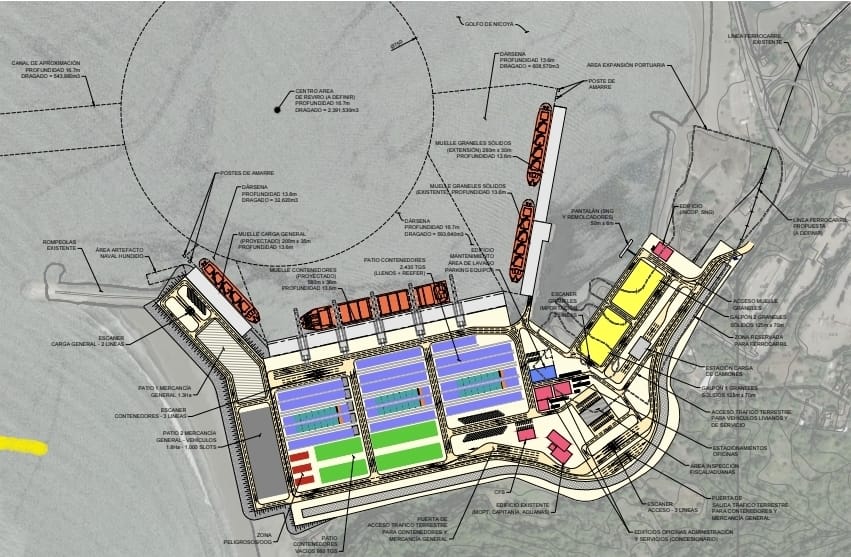
Layout referencial Alternativa A: nuevo muelle adosado al rompeolas, terminal especializada de contenedores y mejoramiento de terminal granelera. (Fuente: INCOP, Aval Técnico CR-INCOP-PE-0509-2024, septiembre 2024).
Reference layout Alternative A: new berth attached to breakwater, specialized container terminal, and bulk terminal improvements. (Source: INCOP, Technical Endorsement CR-INCOP-PE-0509-2024, September 2024).
Perspectiva regional: Costa Rica como laboratorio centroamericano
Regional Perspective: Costa Rica as a Central American Laboratory
Para Centroamérica, el caso costarricense ofrece lecciones importantes. La región enfrenta desafíos similares: infraestructura portuaria obsoleta, marcos regulatorios fragmentados, y presión creciente para cumplir estándares ambientales internacionales.
La ventana de oportunidad es limitada. Panamá desarrolla protocolos ambientales avanzados para mantener su liderazgo regional. Colombia moderniza el Puerto de Cartagena como hub ambiental del Caribe. Los países que completen primero su modernización ambiental atraerán el tráfico marítimo premium: navieras internacionales que pagan mejores tarifas por servicios certificados.
Costa Rica tiene la oportunidad de posicionarse como centro regional de servicios ambientales marítimos. Su ubicación geográfica —con costas en ambos océanos— y su reputación ambiental internacional podrían convertirse en ventajas competitivas reales, si la implementación de MARPOL se ejecuta inteligentemente.
For Central America, the Costa Rican case offers important lessons. The region faces similar challenges: obsolete port infrastructure, fragmented regulatory frameworks, and growing pressure to meet international environmental standards.
The window of opportunity is limited. Panama is developing advanced environmental protocols to maintain its regional leadership. Colombia is modernizing the Port of Cartagena as a Caribbean environmental hub. Countries that complete their environmental modernization first will attract premium maritime traffic: international shipping lines that pay better rates for certified services.
Costa Rica has the opportunity to position itself as a regional center for maritime environmental services. Its geographic location—with coasts on both oceans—and its international environmental reputation could become real competitive advantages, if MARPOL implementation is executed intelligently.
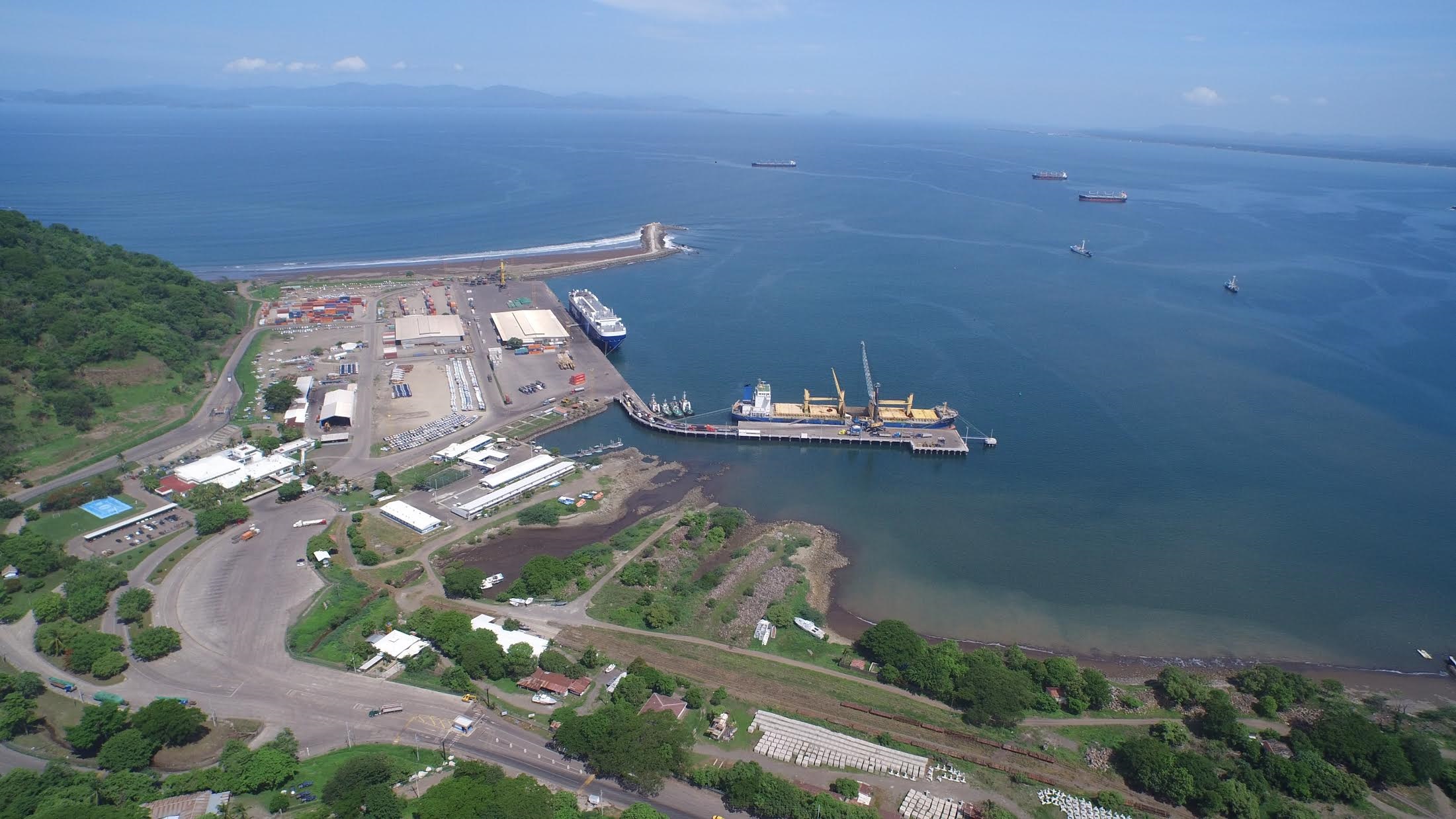
Vista aérea de Puerto Caldera: al fondo el rompeolas y terminal de contenedores; en primer plano el muelle granelero. Los buques en rada evidencian la saturación operativa del puerto. (Foto: Cortesía de SPC).
Aerial view of Puerto Caldera: breakwater and container terminal in background; bulk terminal in foreground. Vessels at anchorage illustrate the port’s operational saturation. (Photo: Courtesy of SPC).
Reflexión final: el momento de actuar
Final Reflection: The Time to Act
La convergencia de la licitación de Puerto Caldera, la aprobación de MARPOL y la construcción de capacidades técnicas representa una oportunidad histórica que Costa Rica no puede desperdiciar. El error de 1999 fue pensar que el país necesitaba ser perfecto antes de comprometerse. La realidad internacional demuestra que los países se desarrollan después de asumir compromisos exigentes.
Los próximos meses serán cruciales. La Comisión Evaluadora analizará las ofertas recibidas. Una vez publicado en La Gaceta, MARPOL entrará en vigor automáticamente. Los nuevos concesionarios deberán asumir responsabilidades ambientales claras desde el inicio de sus operaciones.
La pregunta ya no es si Costa Rica puede modernizar su sector portuario cumpliendo estándares ambientales internacionales. La pregunta es si aprovechará completamente esta convergencia histórica para transformarse en referente regional. Para quienes estudiamos las ciudades portuarias, Costa Rica ofrece en este momento un caso de observación privilegiado: el de un país que, después de décadas de postergación, tiene la oportunidad de hacer las cosas bien desde el principio.
The convergence of the Puerto Caldera tender, MARPOL approval, and technical capacity building represents a historic opportunity that Costa Rica cannot waste. The error of 1999 was thinking the country needed to be perfect before committing. International reality demonstrates that countries develop after assuming demanding commitments.
The coming months will be crucial. The Evaluation Commission will analyze the bids received. Once published in La Gaceta, MARPOL will automatically enter into force. New concessionaires must assume clear environmental responsibilities from the start of their operations.
The question is no longer whether Costa Rica can modernize its port sector while meeting international environmental standards. The question is whether it will fully leverage this historic convergence to become a regional benchmark. For those of us who study port cities, Costa Rica currently offers a privileged observation case: that of a country which, after decades of postponement, has the opportunity to do things right from the beginning.
IMAGEN INICIAL | Vista del puerto de Caldera en el Pacífico de Costa Rica. (Foto: Cortesía de SPC).
HEAD IMAGE | View of the Caldera port in the Pacific side of Costa Rica. (Photo: Courtesy of SPC).