╔
Si se puede administrar el puerto de Buenos Aires se podrá redefinir el futuro de la ciudad
Buenos Aires no puede comprenderse sin su vínculo con el puerto. Ya en el siglo XVI, tanto en el primer asentamiento de Pedro de Mendoza como en la fundación definitiva de Juan de Garay -ambos navegantes- el río fue el eje sobre el cual se pensó la ciudad. Esa impronta quedó tan arraigada en nuestra identidad que, aún hoy, nos definimos como porteños.
Esta condición portuaria convirtió a Buenos Aires en una puerta de entrada y salida del país, y en un punto de contacto permanente con el mundo. Un rol estratégico que hoy continúa siendo central para el desarrollo económico y urbano.
Hace ya casi 32 años la Ciudad dio un paso histórico al obtener su autonomía constitucional, un logro que transformó su relación con el gobierno federal y redefinió su capacidad para gestionar los asuntos que afectan directamente a sus más de tres millones de habitantes. Sin embargo, pese a los avances logrados -tales como la transferencia de más de 30 líneas de colectivo, el servicio de subterráneo y la Policía, entre otras responsabilidades institucionales- queda todavía un área clave donde esta autonomía continúa incompleta: la administración del puerto.
Buenos Aires cannot be understood without its relationship with the port. As early as the 16th century, both during Pedro de Mendoza’s first settlement and Juan de Garay’s definitive founding —both navigators— the river was the axis around which the city was conceived. That imprint became so deeply rooted in our identity that, even today, we define ourselves as porteños.
This port-based condition turned Buenos Aires into a gateway into and out of the country, as well as a permanent point of contact with the world — a strategic role that remains central to its economic and urban development.
Nearly 32 years ago, the City of Buenos Aires took a historic step by achieving constitutional autonomy, a milestone that transformed its relationship with the federal government and redefined its capacity to manage matters directly affecting more than three million residents. However, despite the progress made —such as the transfer of more than 30 bus lines, the subway system, and the police force, among other institutional responsibilities— one key area remains where autonomy is still incomplete: the administration of the port.
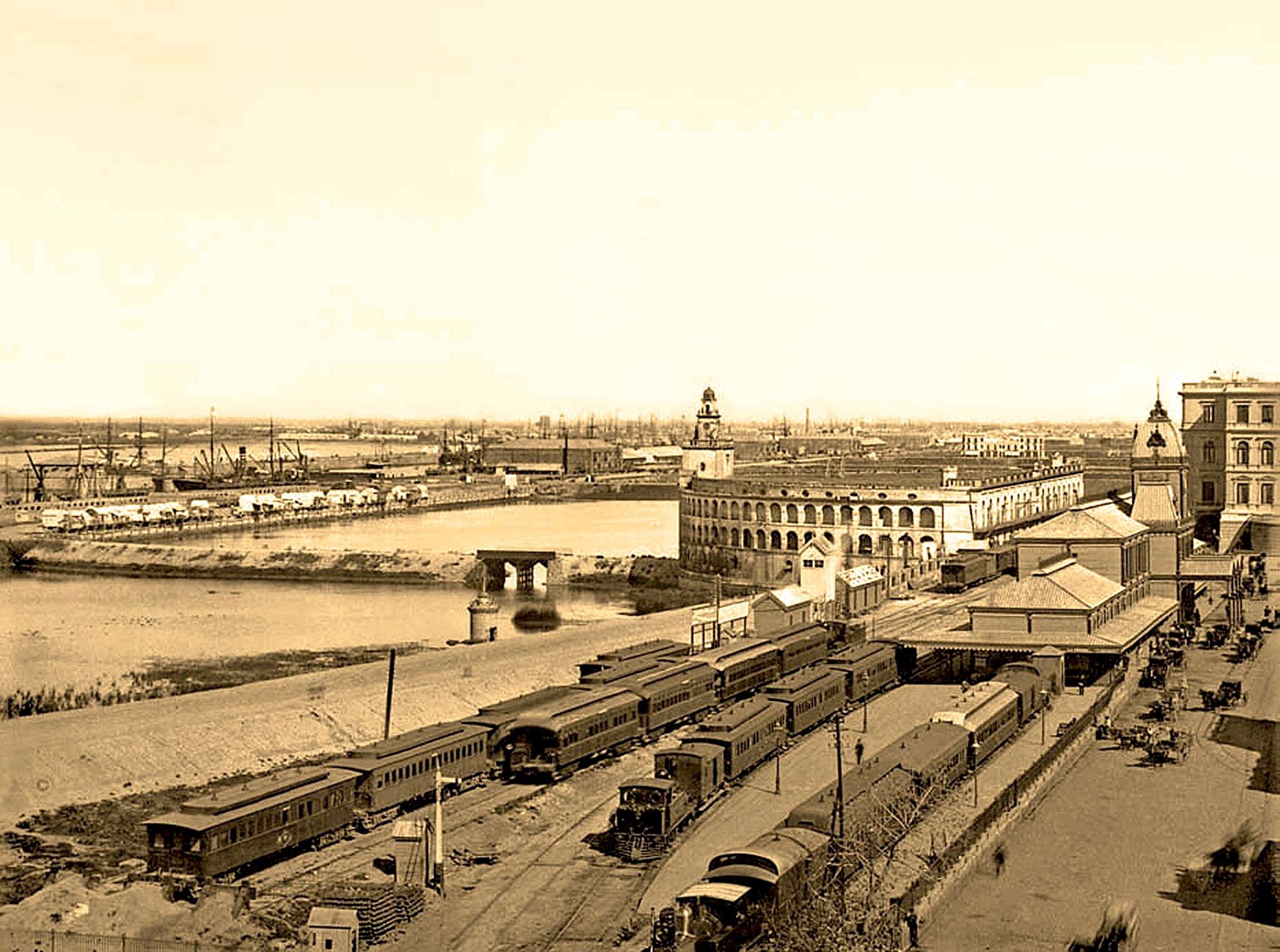
A comienzos de 1890, la gran obra de la Aduana diseñada por el arquitecto inglés Edward Taylor sobre el río, junto a la desaparecida Estación Central. Atrás a la derecha, parte posterior de la Casa de Gobierno. (Archivo General de la Nación – AGN).
At the beginning of the 1890s, the great Customs House designed by the English architect Edward Taylor on the riverfront, next to the now-demolished Central Station. In the background on the right, the rear section of the Government House. (General Archive of the Nation – AGN).
La transferencia de competencias aún pendiente no solo reabre el debate sobre el federalismo, sino que también plantea un desafío clave para el desarrollo local. El puerto es fundamental para consolidar la autonomía y posee un enorme potencial logístico y urbano. Es también una pieza esencial para la economía local y nacional. Sin embargo, aun con su ubicación estratégica en el corazón de Buenos Aires, sigue bajo el control del Gobierno nacional.
Esta situación genera tensiones e ineficiencias que se traducen en mayores costos logísticos, menor competitividad y un impacto directo en la calidad de vida de los vecinos, que conviven con tránsito pesado, contaminación y una escasa integración entre el puerto y la ciudad.
A ello se suma que una parte significativa del área portuaria se encuentra subutilizada o degradada. Si bien el puerto fue históricamente un eje logístico fundamental, su capacidad de adaptación a las nuevas dinámicas del comercio y de la ciudad encuentra fuertes restricciones. Los accesos terrestres, tanto viales como ferroviarios, ya están saturados y un aumento significativo del tránsito de carga generaría una congestión intolerable. Esta realidad obliga a repensar su rol dentro de una estrategia de desarrollo local.
Diversos especialistas coinciden en que este atraso en infraestructura y gestión redujo su competitividad, encareciendo la operatoria para exportadores e importadores. Mientras otros puertos de la región avanzaron en procesos de modernización que atrajeron inversiones privadas, el puerto porteño quedó rezagado en términos de eficiencia y costos.
Frente a este escenario, resulta clave avanzar en su revitalización: debe seguir cumpliendo su función logística, pero con una planificación de infraestructura adecuada que represente una oportunidad de expansión sustentable para la Ciudad. Una gestión local permitiría integrar esta extensa zona al entorno urbano, atraer inversiones, generar empleo, crear áreas verdes y nuevos espacios públicos y mejorar la calidad de vida de los vecinos.
Un ejemplo virtuoso de este enfoque es el desarrollo de Puerto Madero, que en los últimos 30 años atrajo miles de millones de dólares en inversiones privadas, transformando una zona portuaria abandonada en uno de los barrios más dinámicos y valorados.
The transfer of these still-pending powers not only reopens the debate on federalism, but also poses a critical challenge for local development. The port is essential to consolidating the City’s autonomy and, at the same time, holds enormous logistical and urban potential. It is also a vital asset for both the local and national economy. Yet, despite its strategic location in the heart of Buenos Aires, it continues to be administered by the national government.
This situation generates tensions and inefficiencies that translate into higher logistical costs, reduced competitiveness, and a direct impact on residents’ quality of life, who must contend with heavy traffic, pollution, and the lack of integration between the port and the city.
In addition, a significant portion of the port area is currently underused or degraded. While the port has historically been a key logistical hub, its ability to adapt to new commercial dynamics and urban demands faces substantial constraints. Land access routes —both road and rail— are already saturated, and any significant increase in cargo traffic would generate congestion levels that are unsustainable for the city. This reality makes it necessary to rethink the port’s role within a broader local development strategy.
Numerous specialists agree that this lag in infrastructure and management has reduced the port’s competitiveness, increasing costs for exporters and importers. While other ports in the region have advanced modernization processes that attracted private investment, the Port of Buenos Aires has fallen behind in terms of efficiency and operating costs.
Against this backdrop, moving forward with its revitalization is unavoidable. The port must continue to fulfill its logistical function, but through appropriate infrastructure planning it can also become an opportunity for sustainable urban expansion. Local management would allow this extensive area to be better integrated into the urban fabric, attract investment, generate employment, create new public spaces, and improve residents’ quality of life.
A clear example of this approach is the development of Puerto Madero, which over the past 30 years has attracted billions of dollars in private investment, transforming a derelict port area into one of the city’s most dynamic and highly valued neighborhoods.
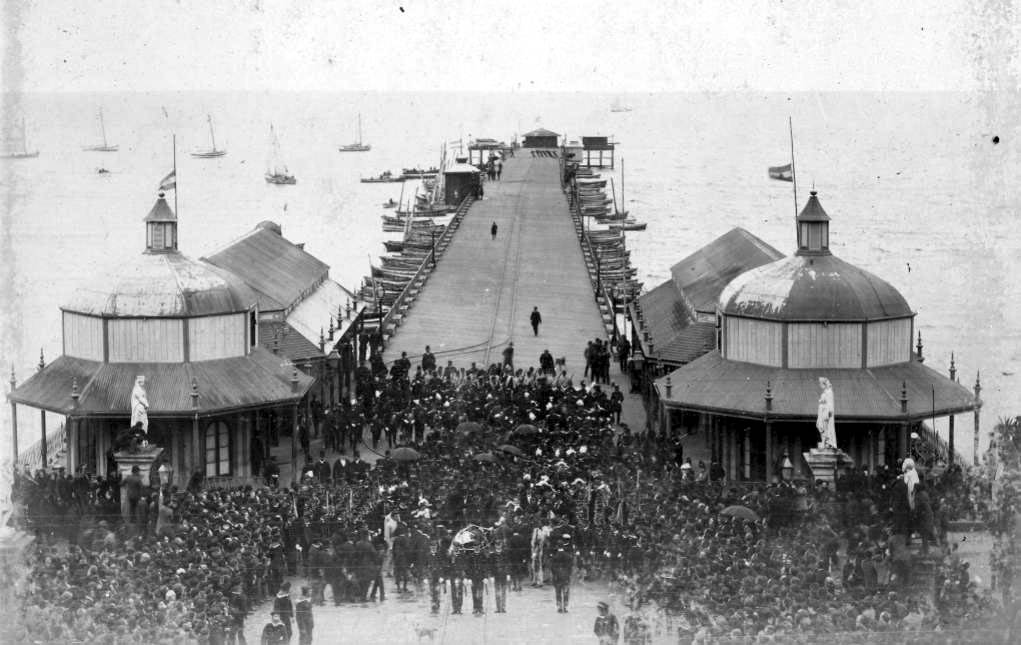
El muelle de pasajeros que poseía el puerto de Buenos Aires, en 1888. (Archivo General de la Nación – AGN).
The passenger pier of the Port of Buenos Aires in 1888. (General Archive of the Nation – AGN).
El puerto también es el principal punto de ingreso para el turismo de cruceros, una actividad en franco crecimiento que aporta un impacto significativo a la economía de la ciudad y del país. Para tener una real dimensión sobre este tema, según el Ente de Turismo de la Ciudad de Buenos Aires, en la última década creció el 49% la cantidad de turistas (casi 500.000 extranjeros) que llegaron en un 59% más de cruceros que amarraron en nuestro puerto. Es más: uno de cada dos turistas que llegaron en cruceros se quedaron en la Ciudad de Buenos Aires.
En la actualidad la industria de los cruceros genera aquí más de 20.000 puestos de trabajo, directos e indirectos. Con una administración eficiente y una visión a largo plazo, este sector podría potenciarse, aumentando el número de visitantes y los ingresos asociados al turismo.
Este conflicto administrativo tiene raíces históricas: en la década de 1990, bajo el contexto de reformas estructurales, se promulgó la Ley de Federalización de Puertos, que transfirió la gestión de varios puertos nacionales a las provincias. Sin embargo, el puerto de Buenos Aires quedó excluido de este proceso, consolidando su control por parte del gobierno federal.
Esta decisión no solo marcó una excepción significativa en el esquema de descentralización, sino que también perpetuó un modelo que no refleja las necesidades y especificidades del territorio porteño, con consecuencias negativas en escala metropolitana y nacional.
La autonomía plena de la Ciudad de Buenos Aires implica que el gobierno local tenga la capacidad de gestionar total o parcialmente los recursos y las infraestructuras que afectan directamente a su territorio. El caso del puerto no es solo una cuestión de eficiencia administrativa, sino también de justicia territorial. Si la Ciudad tiene que asumir los costos sociales y ambientales asociados al funcionamiento del puerto, también debería tener el poder de decidir cómo se administra y cómo se integra al desarrollo urbano.
La transferencia de la administración del puerto al gobierno de la Ciudad no es un concepto nuevo. Muchas ciudades en el mundo, como Hamburgo, Nueva York y Rotterdam, gestionan sus propios puertos logrando un equilibrio entre el desarrollo económico y la sostenibilidad urbana. En estos casos, la administración local ha permitido implementar políticas alineadas con las necesidades de los vecinos, promoviendo una planificación urbana más inteligente y un crecimiento económico inclusivo.
A más de 30 años de la autonomía, es momento de reflexionar sobre los desafíos pendientes y de avanzar hacia una ciudad que pueda gestionar de manera integral su territorio, tal como señala el Jefe de Gobierno de la Ciudad, Jorge Macri. La transferencia de la administración del puerto al gobierno local no solo sería un acto de justicia histórica, sino también un paso esencial para construir una Buenos Aires más eficiente y sostenible.
En este sentido, el establecimiento de la Agencia Nacional de Puertos y Navegación en reemplazo de la AGP (Administración General de Puertos), junto con otras medidas recientes orientadas a desregular y fortalecer las autonomías federales, representa hoy una oportunidad única.
Estas acciones podrían sentar las bases para la pronta implementación de la transferencia del puerto a la Ciudad de Buenos Aires, marcando un hito decisivo hacia un modelo más justo y eficiente de administración territorial. En la actualidad, referentes del sector privado coinciden en que la infraestructura porteña es obsoleta, posee costos altos y aún existen concesiones poco claras heredadas de anteriores administraciones.
En este sentido y con el traspaso como meta, el Gobierno de la Ciudad ya ha comenzado a realizar estudios para el desarrollo portuario. Además, participa en el desarrollo de un Plan Urbano Ambiental y el Plan Maestro del Puerto, a fin de integrar el mismo al sistema de tránsito, transporte y el espacio público.
Por ello, no debemos esperar más. El puerto de Buenos Aires, uno de los cinco más importantes de Sudamérica, posee una infraestructura clave para nuestra ciudad y debe ser aprovechado al máximo, tanto en su función logística como en su potencial de integración urbana y desarrollo económico.
The port is also the main entry point for cruise tourism, a rapidly growing activity that has a significant impact on both the city’s and the country’s economy. According to the Buenos Aires City Tourism Board, over the past decade the number of tourists increased by 49% —nearly 500,000 foreign visitors— arriving on 59% more cruise ships docking at the port. Moreover, one out of every two cruise passengers stayed in the City of Buenos Aires.
Today, the cruise industry generates more than 20,000 direct and indirect jobs. With efficient management and a long-term vision, this sector could be further strengthened, increasing visitor numbers and tourism-related revenues.
This conflict has historical roots. In the 1990s, within the framework of structural reforms, the Ports Federalization Law was enacted, transferring the administration of several national ports to the provinces. However, the Port of Buenos Aires was excluded from this process, consolidating federal control.
This decision not only represented a significant exception within the decentralization framework, but also perpetuated a model that fails to reflect the needs and specificities of the city, with negative consequences at both metropolitan and national levels.
Full autonomy for the City of Buenos Aires implies that the local government should have the capacity to manage, wholly or partially, the resources and infrastructure that directly affect its territory. In the case of the port, this is not merely a matter of administrative efficiency, but also one of territorial fairness. If the City bears the social and environmental costs associated with the port’s operation, it should also have the authority to decide how it is managed and how it is integrated into urban development.
The transfer of port administration to the City government is not a new idea. Many cities around the world —including Hamburg, New York, and Rotterdam— manage their own ports, achieving a balance between economic development and urban sustainability. In these cases, local administration has enabled policies aligned with residents’ needs, fostering smarter urban planning and more inclusive economic growth.
More than 30 years after autonomy, it is time to reflect on the remaining challenges and move toward a city capable of managing its territory in an integrated manner, as noted by Buenos Aires Mayor Jorge Macri. Transferring the administration of the Port of Buenos Aires to the City government would not only represent an act of historical justice, but also a crucial step toward building a more efficient and sustainable city.
In this context, the creation of the National Agency for Ports and Navigation to replace the General Ports Administration (AGP), along with other recent measures aimed at deregulation and strengthening federal autonomy, represents a unique opportunity.
These actions could lay the groundwork for the prompt transfer of the port to the City of Buenos Aires, marking a decisive milestone toward a fairer and more efficient model of territorial governance. Today, private-sector stakeholders agree that the port’s infrastructure is obsolete, operating costs are high, and unclear concessions from previous administrations still persist.
The City government has already begun conducting studies on port development in anticipation of a future transfer. It is also actively involved in the Urban Environmental Plan and the Port Master Plan, with the aim of integrating the port into the city’s transportation system, traffic network, and public space.
There is no reason to delay further. The Port of Buenos Aires —one of the five most important in South America— is a critical asset for the City and must be fully leveraged, both in its logistical role and in its potential for urban integration and economic development.
IMAGEN INICIAL | Los muelles del Puerto de Buenos Aires en la actualidad. (Fuente: Administración General de Puertos – AGP).
HEAD IMAGE | The docks of the Port of Buenos Aires today. (Source: General Ports Administration – AGP).